Project update 24 of 24
Announcing Our Upcoming Discovery Drive Campaign!
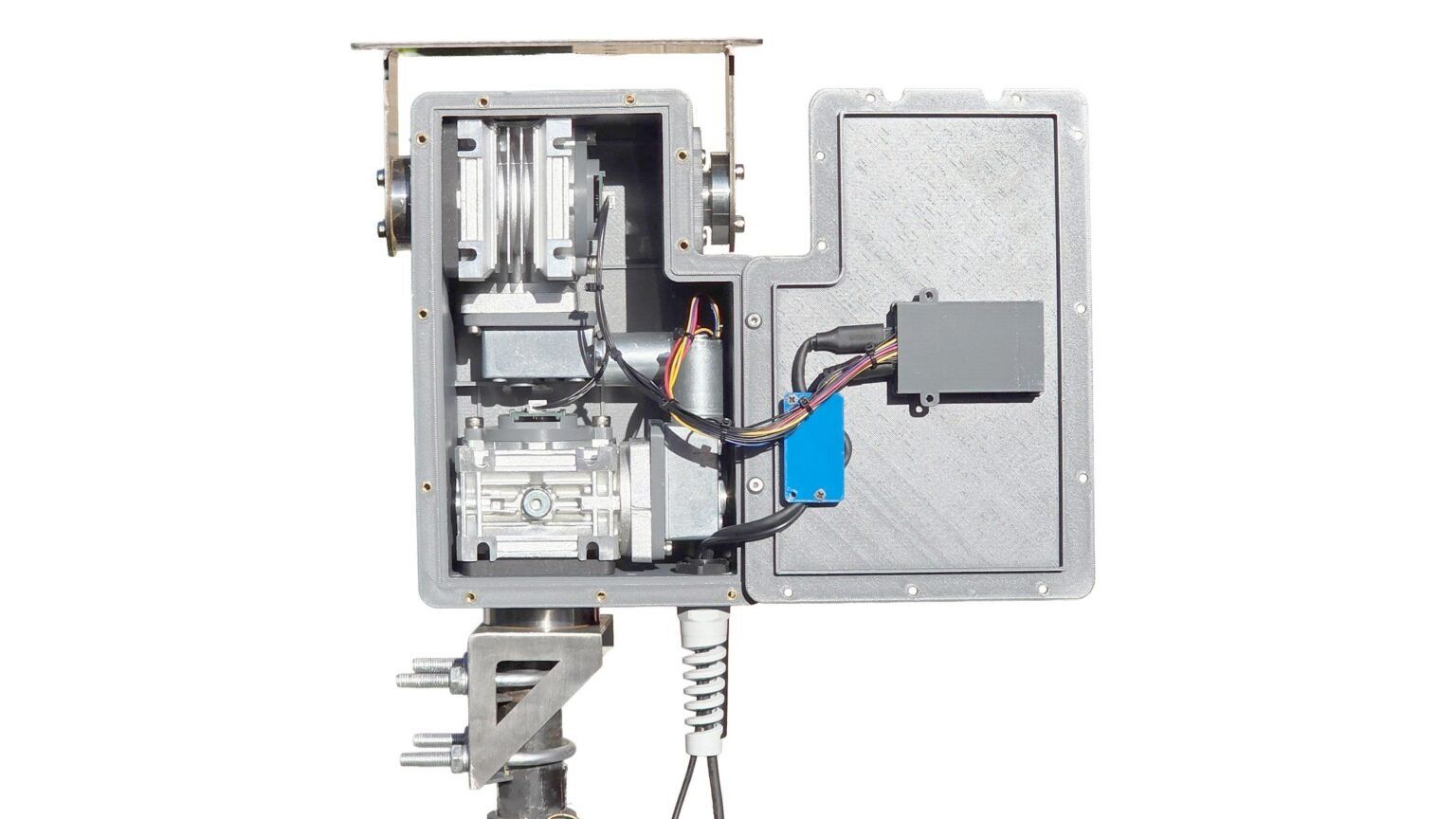
by KrakenRF IncWe’re excited to announce the pre-launch page for our Discovery Drive antenna rotator. Discovery Drive is an affordable automatic antenna rotator designed for the Discovery Dish and similarly sized antennas like Wi-Fi grid and Yagi antennas.
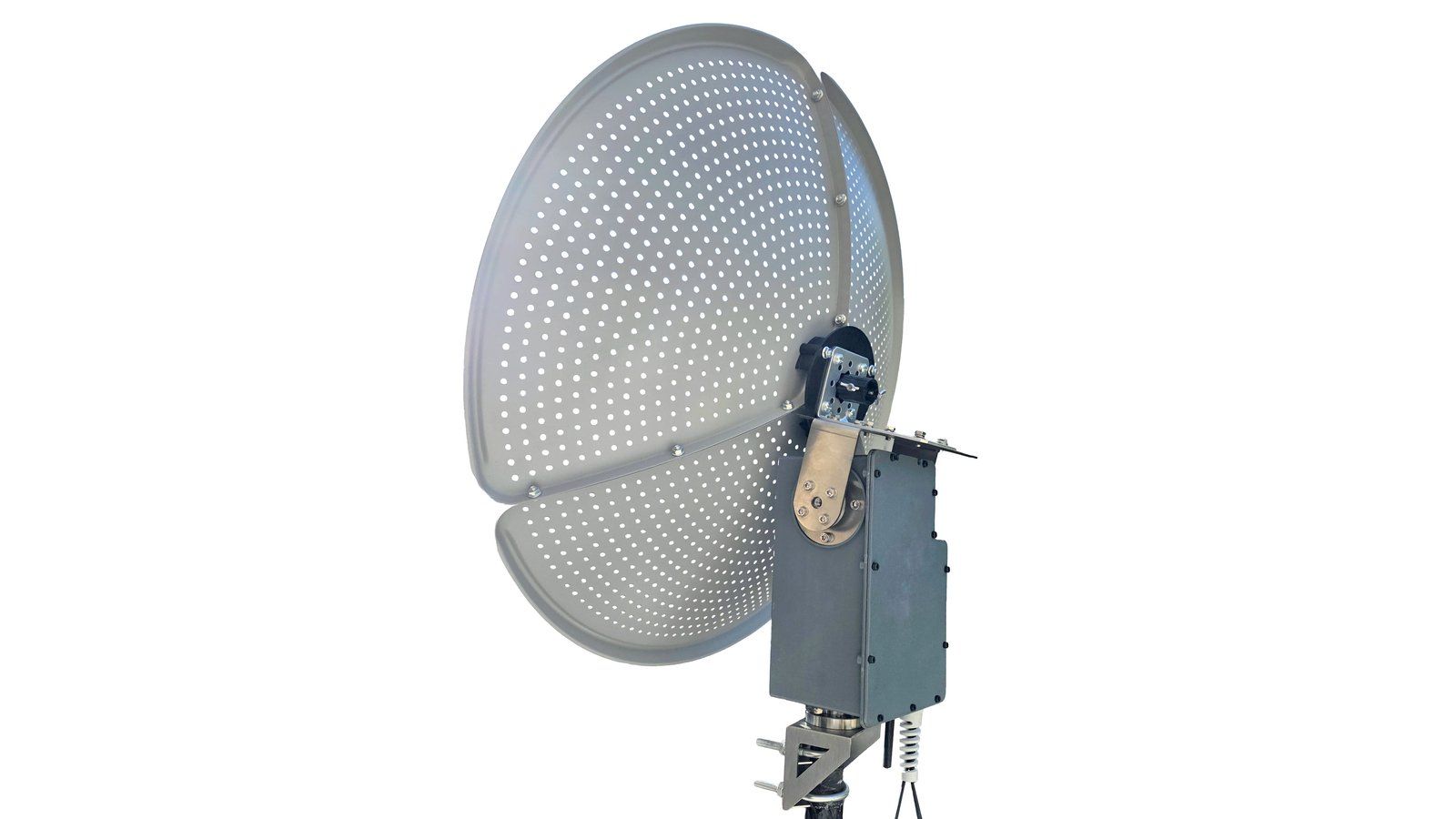
While this product is not directly related to the KrakenSDR, we can think of several potential use-cases that KrakenSDR customers may be interested in having an antenna rotator for.
Alternative Directional Antenna Power-Based Radio Direction Finding
The KrakenSDR uses the phase coherent method for radio direction finding, which is great at automatically finding a bearing over 360 degrees instantly. However, one disadvantage is that omnidirectional antennas must be used, which can limit the range when it comes to weak, low-power signals, such as those from animal tags or other tracking beacons.
For very weak signals, simpler methods that utilize a directional antenna, such as a Yagi, are typically more suitable. Directional antennas receive in one direction with high gain, and receive poorly in other directions. With this method, the idea is to rotate a directional antenna in a 360-degree circle and determine the bearing in which the received signal strength is maximised. The direction of maximal signal strength is the bearing towards the signal source. Having a Yagi on an antenna rotator can help automate this process.
This method is slower, more susceptible to multipathing, and less suitable for intermittent transmitters; however, in some cases, it is the only option when dealing with very weak signals.
Rotate a Coherent Directional Antenna Array
Most use cases with KrakenSDR call for a circular array. However, if you need improved resolution or have a custom implementation that also measures an altitude vector, you can use a linear array. The disadvantage of a linear array is that you only get bearing data from <180 degrees (with heavy degradation at the 0 and 180 degree extremes), and it is not possible to know if the signal is coming from in front of or behind the array.
By using an array of directional antennas, such as Yagi’s or Patch antennas and an antenna rotator, we can overcome the <180 degree limitation, and determine the front/back direction of the signal by using power measurements.
Rotate a Tuned Directional Antenna Towards a Signal Source
The KrakenSDR can be used to determine an initial bearing towards a signal of interest. This bearing information could be fed to a rotator with a tuned directional antenna on it to receive the signal of interest with improved SNR. This could also help with automatically optimizing tight-beam point-to-point communications links.
Array Testing
The rotator could be used to help test custom antenna arrays by mounting the array on the rotator and spinning it with a fixed position signal source transmitting.
Improving Array Resolution
This is theoretical, but it may be possible to use an antenna rotator to rotate a <5-element antenna array 360 degrees to get improved bearing accuracy akin to that of a much larger array. The idea is that rotating the array and taking readings at multiple angles will help average out the poor resolution and increased multipathing given by a small array.
Combine RF DoA with Optical Cameras
KrakenSDR could be used to first determine the location of a signal. Then, an optical camera could be set to look in that direction and take a photo, giving the operator a chance to look for the source (such as obvious antennas or noise sources).
Auto Alignment of Radio Telescopes for Coherent Radio Astronomy
Coherent interferometry or other coherent radio astronomy techniques require the radio telescope dishes to be pointing at the same target. Five coherent satellite dishes connected to a KrakenSDR combined with five Discovery Drive antenna rotators could be a powerful radio astronomy tool.
More Information about the main use case of Discovery Drive
A motorized rotator allows you to use a satellite dish or directional antenna to track and receive signals from polar orbiting satellites, which move quickly across the sky. It also lets you switch swiftly between geostationary satellites without manually realigning the dish.
Examples of polar-orbiting weather satellites that you can track include NOAA POES, METEOR-M2, METOP, and FENGYUN. Depending on your location, you may also have access to other interesting satellites that dump data over specific regions. Amateur radio operators can also use Discovery Drive to track amateur radio satellites with Yagi antennas.
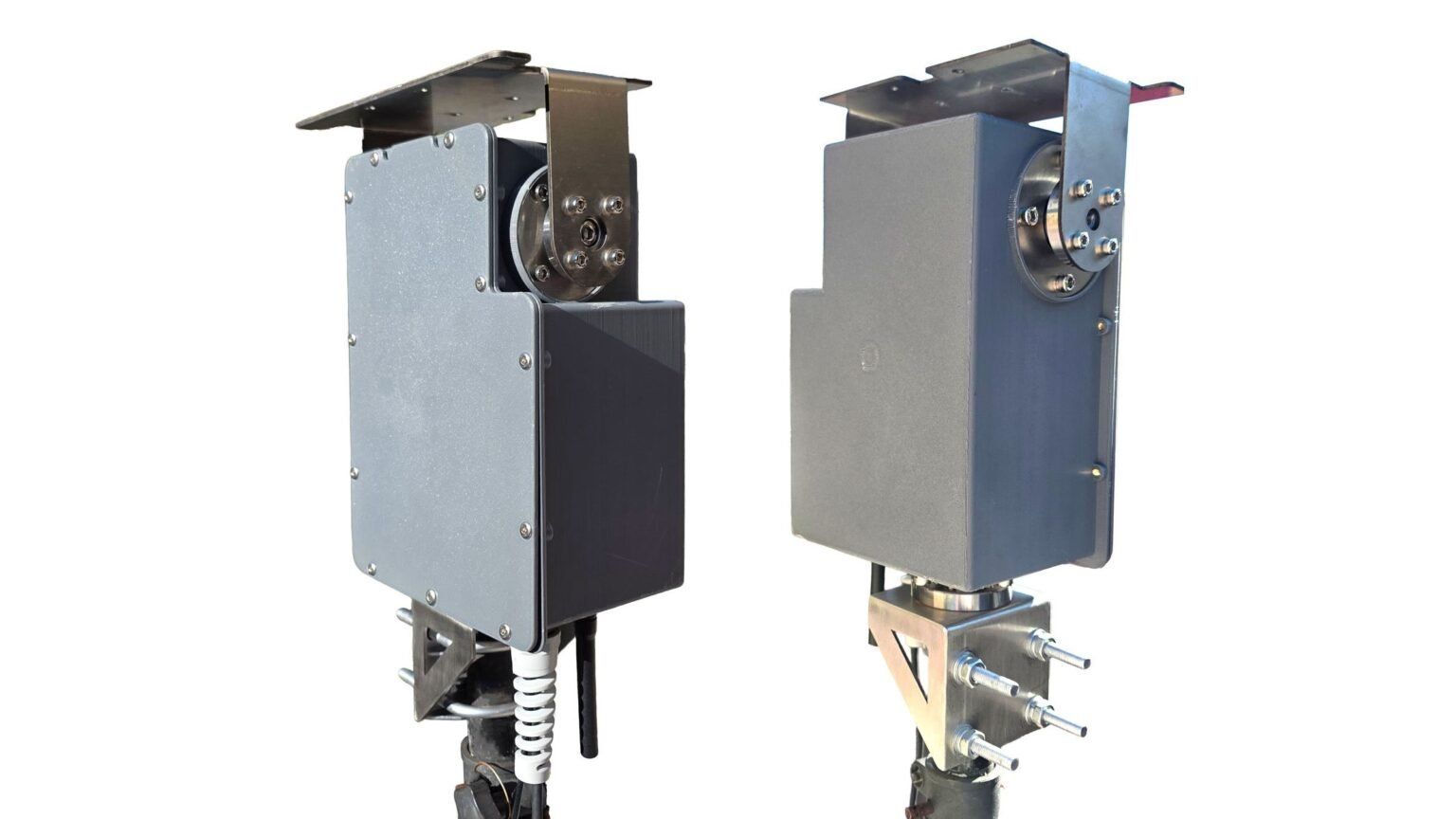
Discovery Dish is designed to be easy to set up and use. Unlike many other rotators on the market, no external controllers are required. Discovery Drive has a built-in ESP32 controller and control can be commanded over WiFi or serial from rotctl-compatible software such as SatDump, GPredict, and Look4Sat on Android.
Features and Specifications
- Up to 125 kgcm (12.25 Nm) of torque
- ESP32 control board
- ± 1.5° of accuracy
- -360° to +360° Azimuth range, 0° - 90° elevation range
- 1.5 RPM Azimuth speed, 0.25 RPM elevation speed
- 12 V power input (either barrel jack or USB Type-C Power Delivery)
- Wi-Fi connectivity with browser-based web UI
- Serial over USB data connectivity or Wi-Fi data connectivity
- Low power draw (< 10 W, can be powered with PoE+ supplies and still have power left over for a single board computer and RTL-SDR)
- Robust, worm gear-locked output drives
- Direct rotctl compatibility over Wi-Fi (compatible with programs that implement the rotctl protocol, such as SatDump, GPredict, and Look4Sat on Android)
- Hamlib compatibility (EasyComm II protocol)
- Waterproof outdoor enclosure
- Open source ESP32 firmware