Firstly, I would like to thank everyone for their support, the Icepi Zero campaign was fully funded within 12 hours! A pre-production verification batch was already ordered, and it should arrive within 4 weeks - everything is on schedule for mass production!
I’m honored to see how much support Icepi has received already. It all started as a personal project to develop a small, portable FPGA dev board.
The first prototype that I made was actually vastly different from it’s current form: it had nothing to do with a Pi Zero form. The first design was just a small dev board carrying an ICE40.
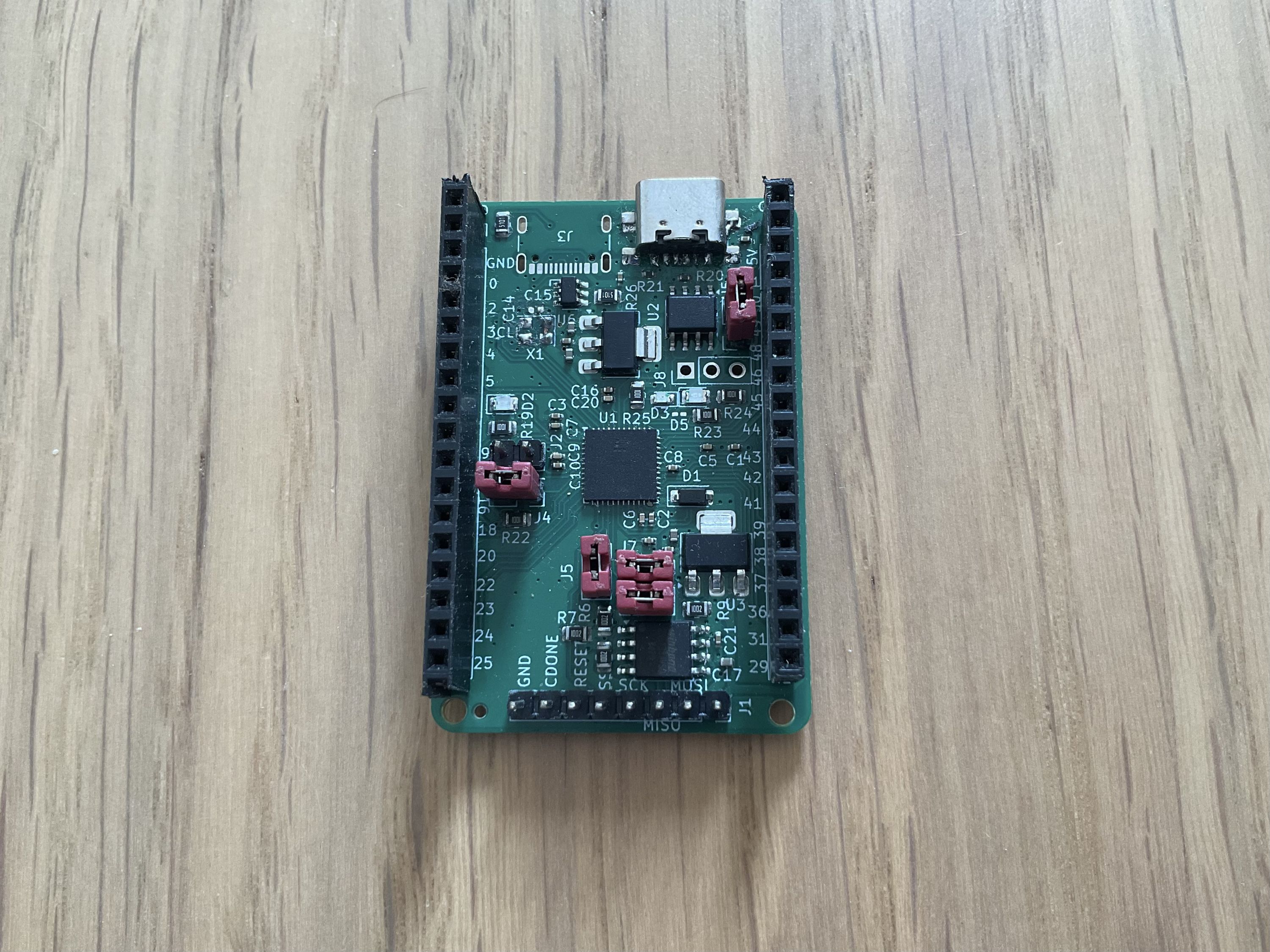
And honestly, it wasn’t that great! Flashing was difficult, the pinout was a mess and I’m shamed to say that I even forgot to break out the GND pins…
But on the good side, this let me learn many lessons. Thus I proceeded to redefine my needs: I want a GPDI port for easy and universal video output, an easy method to flash the board, USB ports for multiple I/O devices, uSD slot for storage, and of course a lot of GPIO pins. And that sparked the idea for me: what if there was a FPGA in a Pi Zero form?
Now that the idea was solidified, I put myself to work. I decided to go with the ECP5 as the main onboard FPGA, as it is powerful, has a free and open source toolchain and a nice community around it.
This was one of my first designs with the ECP5:
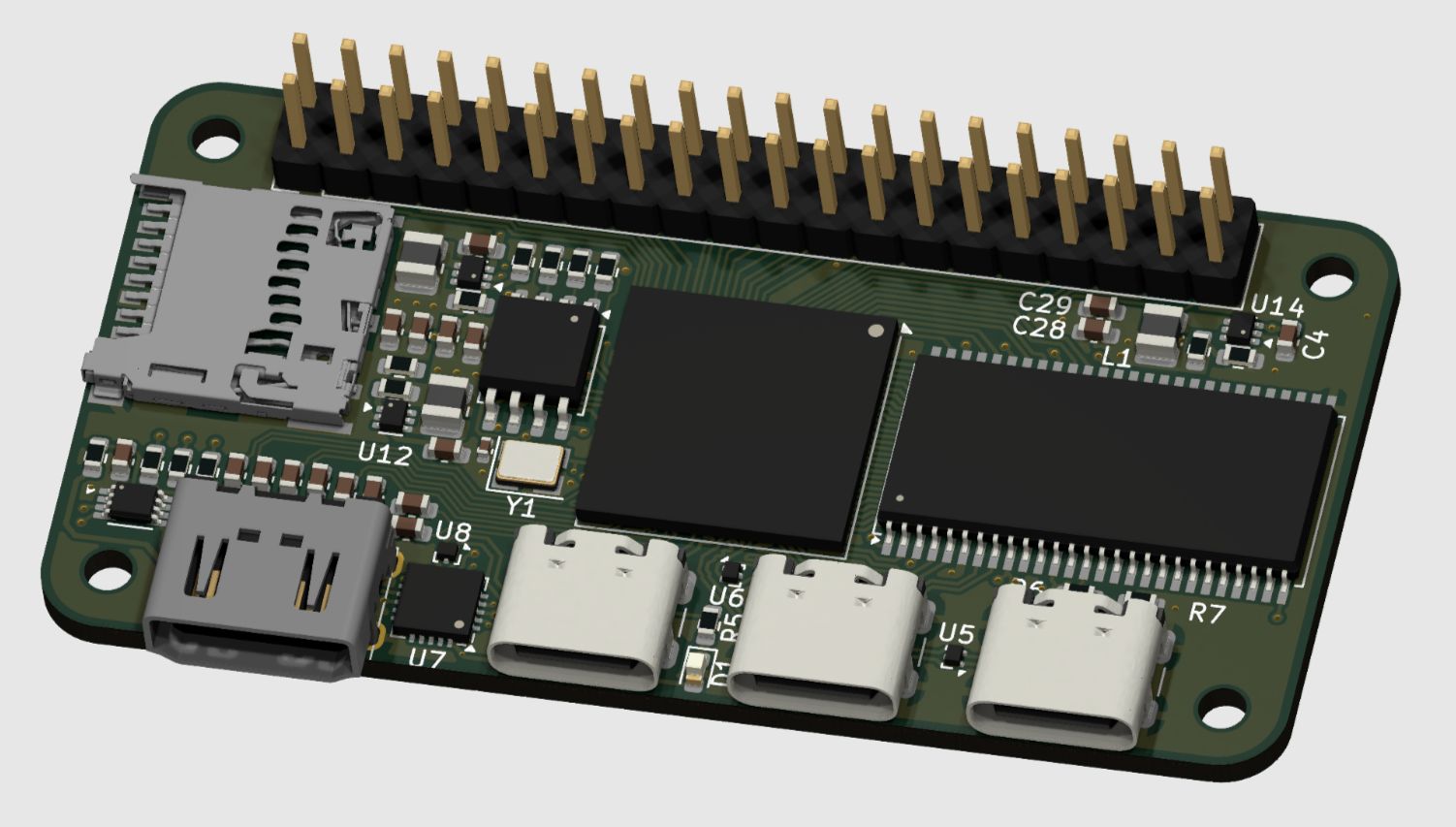
On the positive side, it looked pretty nice and I was sure that I was on the right track. But on the other side, the PCB was a bit thicker then a normal Pi Zero. For this board, a ECP5 and a USB-C port makes a really tight fit - I has to run though multiple reroutes to get the perfect arrangement.
At this point, I got so excited with the idea that I couldn’t stop at anything but the perfect design. A few hundreds hours of work and multiple revisions later, I finally made a design that satisfied me:
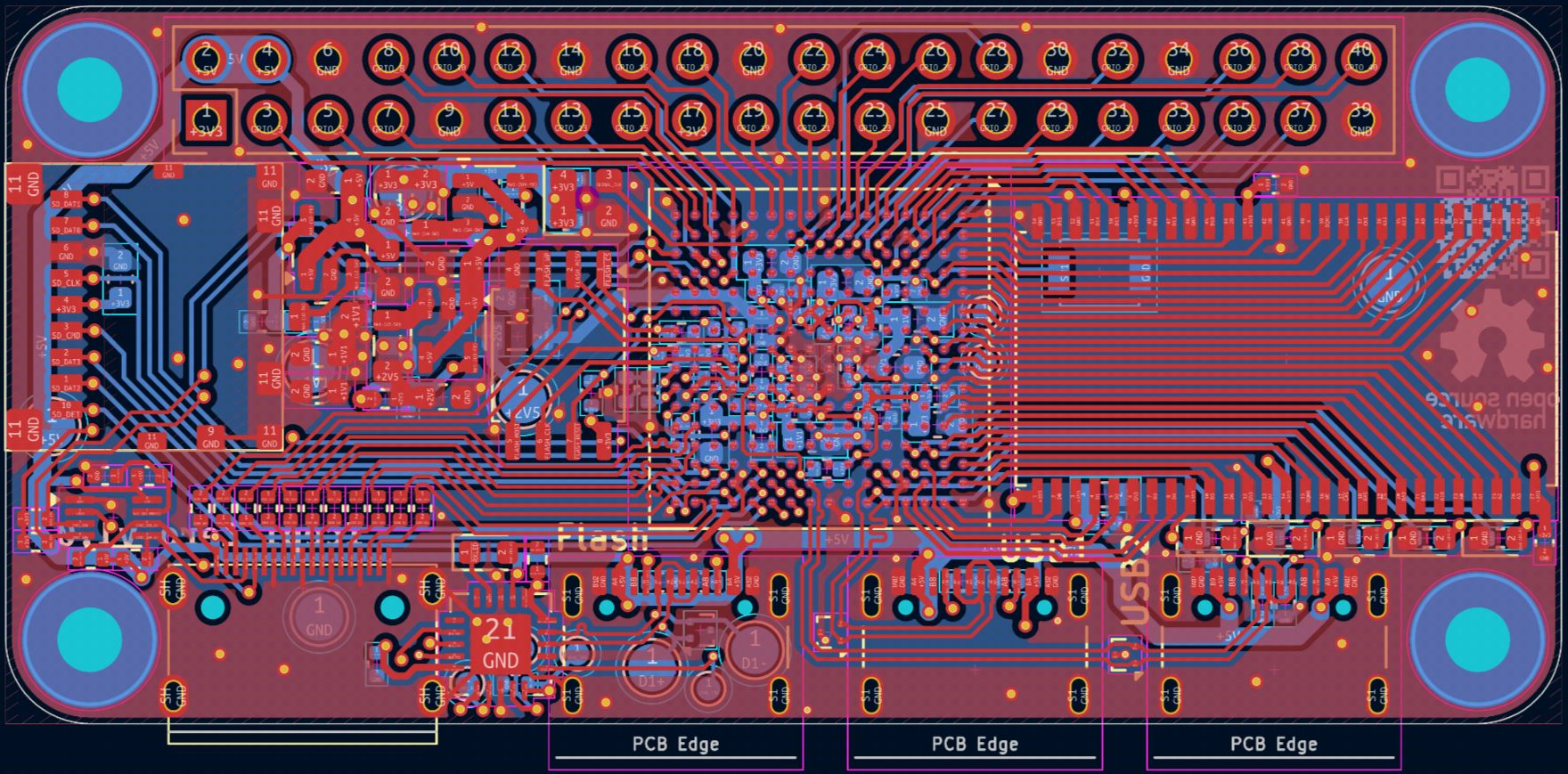
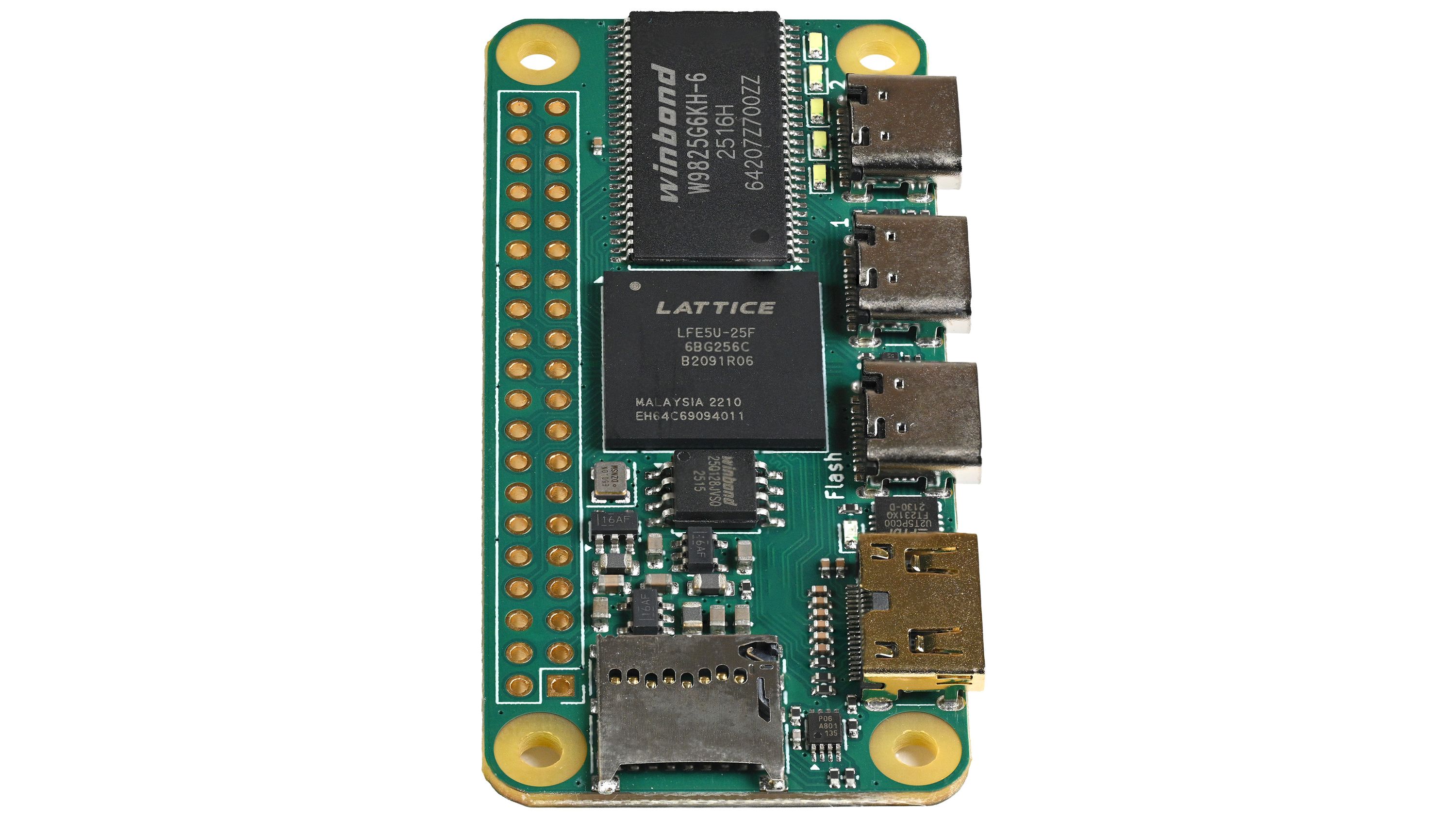
It had minimal vias, everything was a super tight fit with traces interwoven into a beautiful painting. With the same form as the Pi Zero, it had all the ports I need. Paired with an onboard FT231X, no external programming hardware was needed. This was a board that truly met all my needs. So off to production it went!
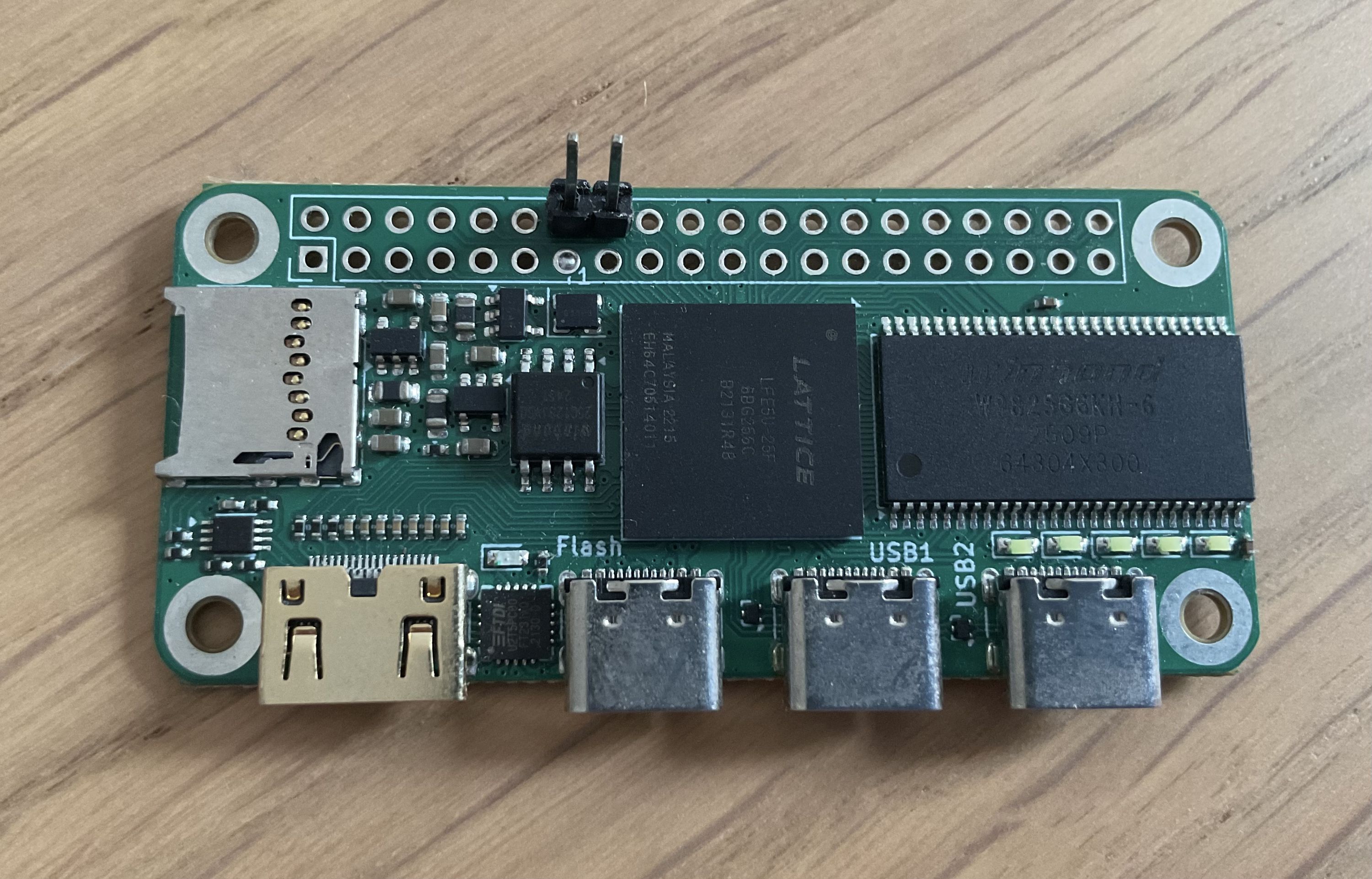
The PCBs came back pretty nice, and I was very happy about the result! I posted about it on Reddit, a lot people appreciated my work. A few people even expressed the desire to buy them! So I’ve continued to work on the design and firmware for the Icepi Zeros, and that’s what lead me to today’s campaign :-)
Thank you so much to everyones support thus far. If you haven’t yet, please check out the Icepi Zero campaign. I’d love to see what you create with it!