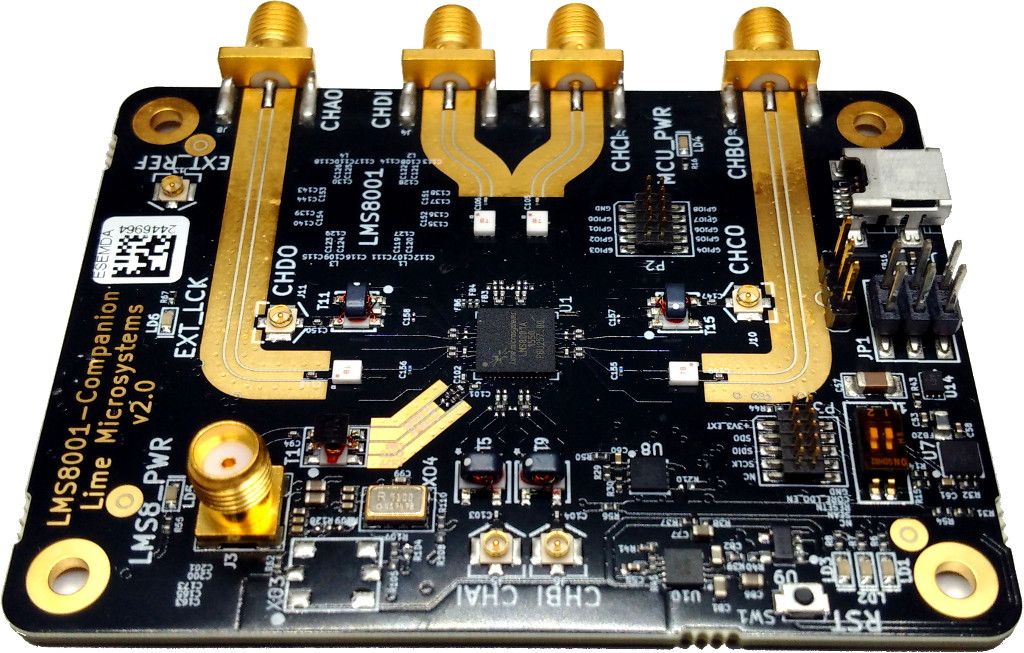
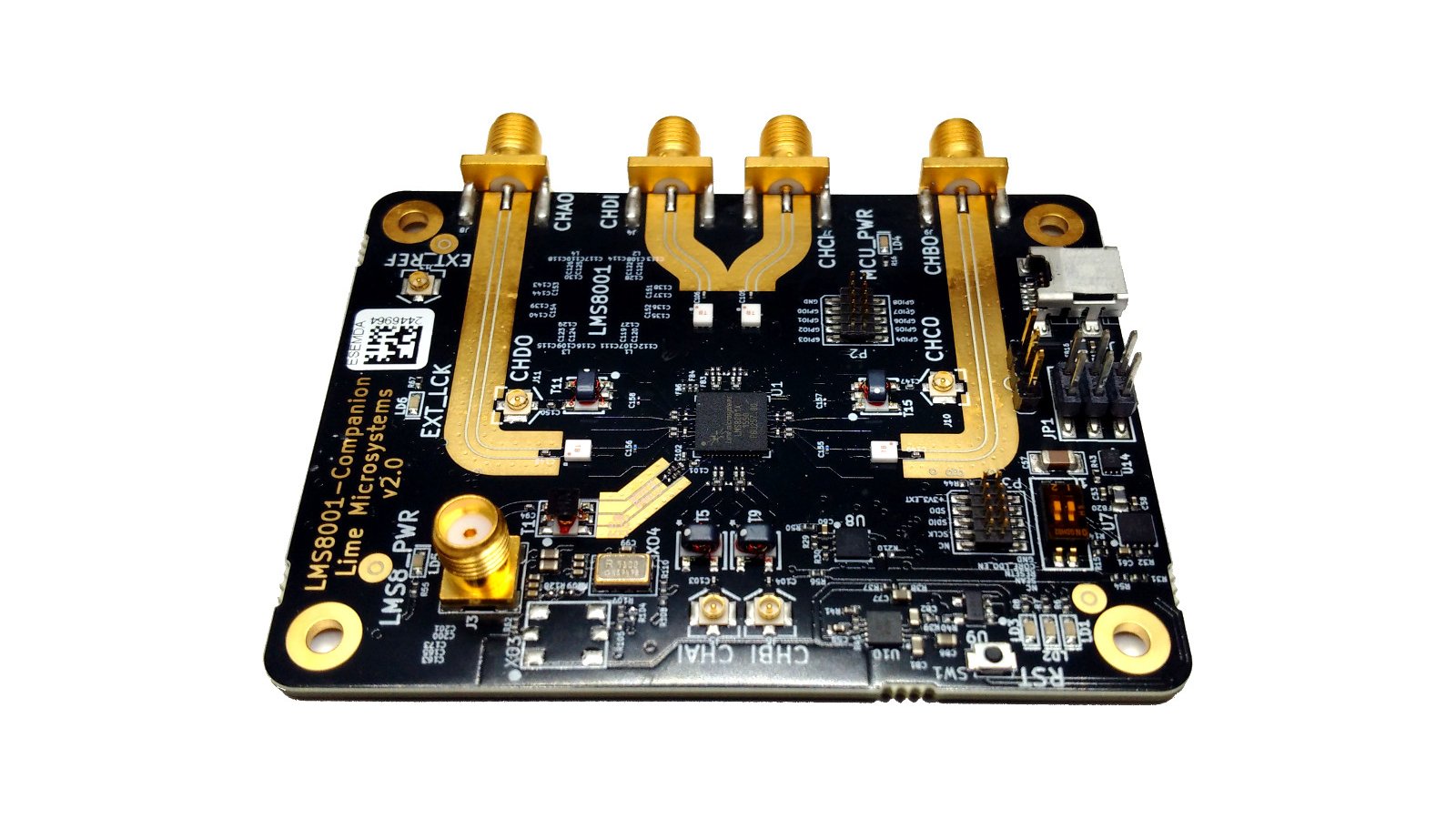
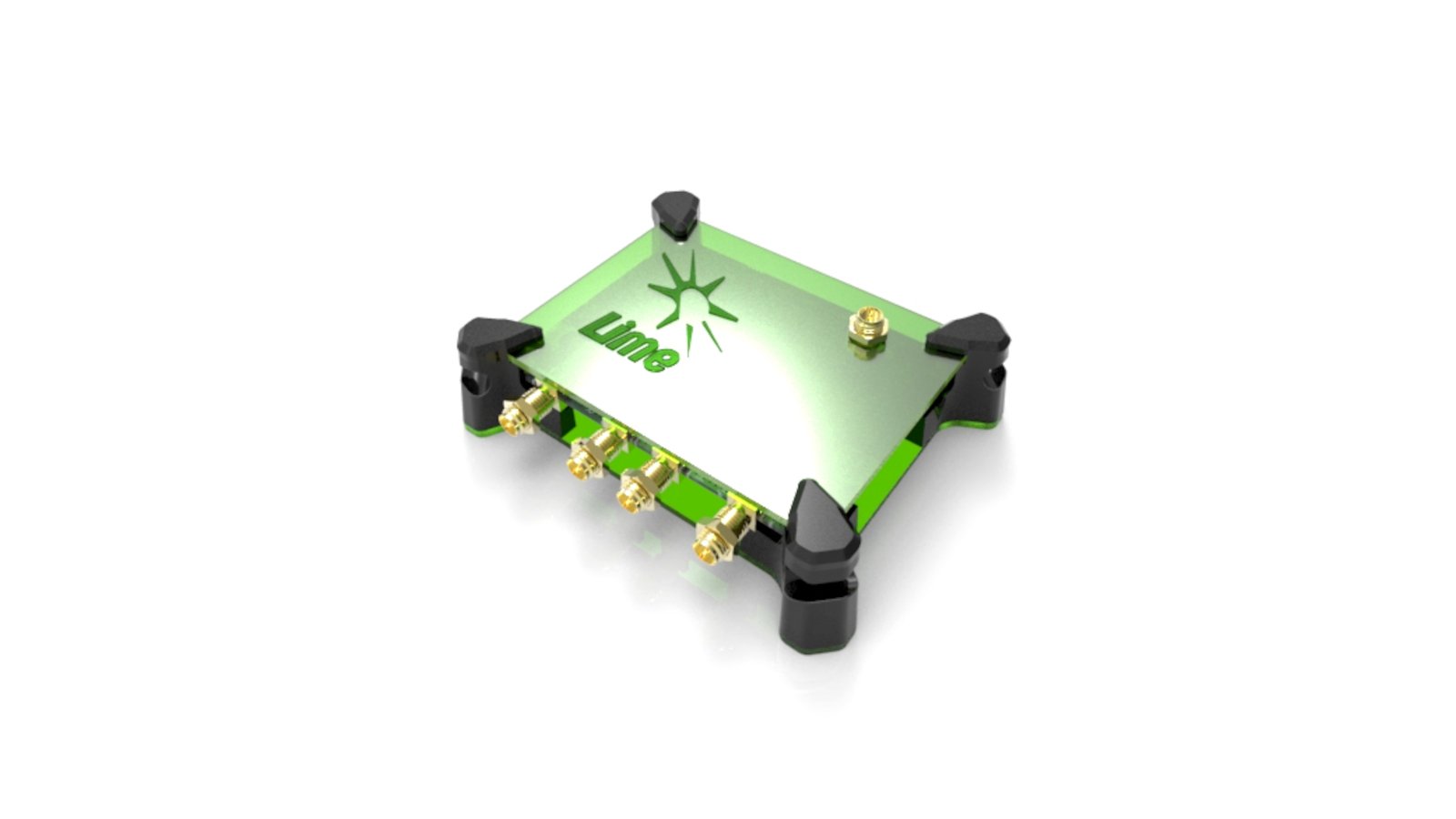
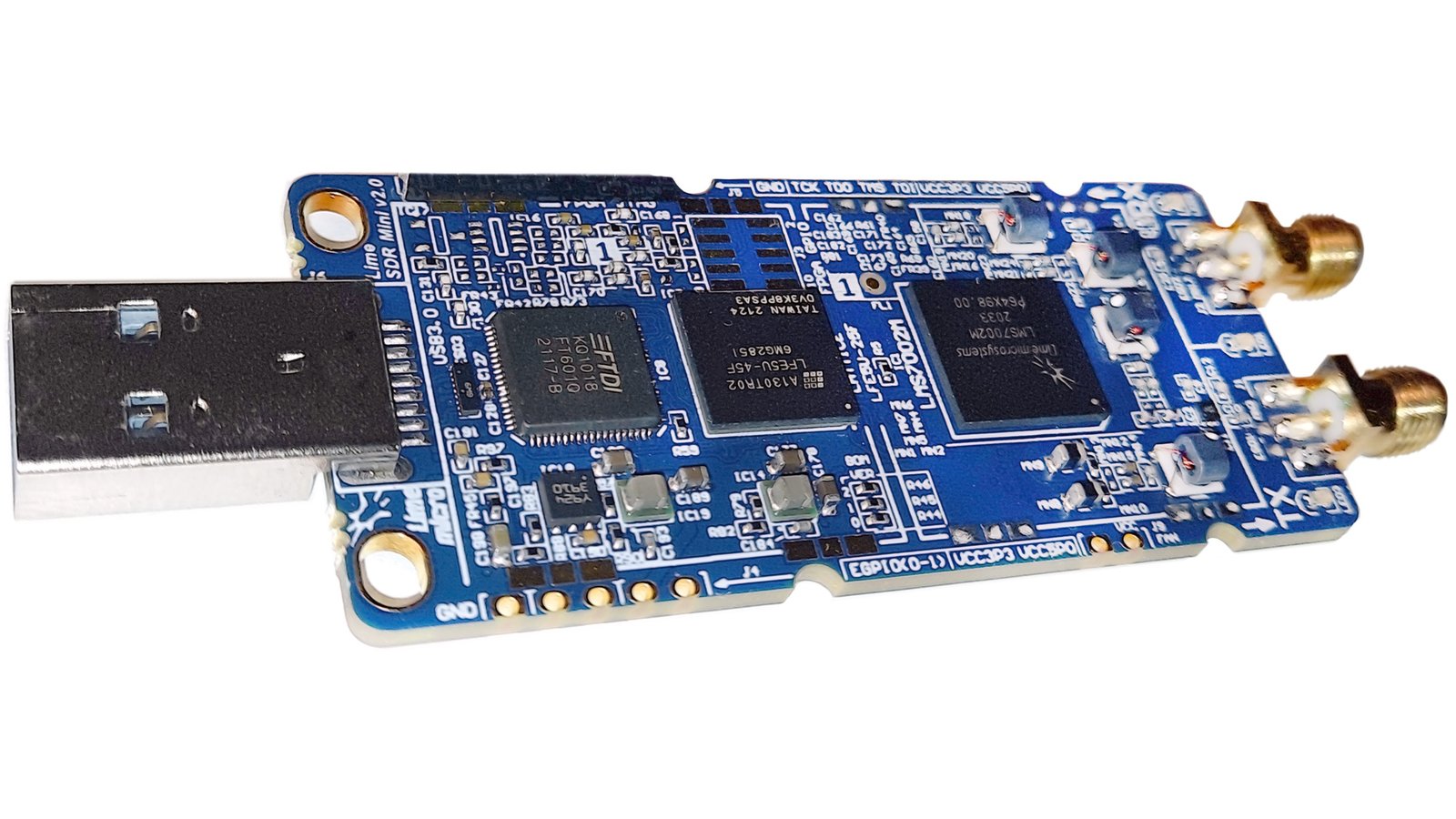
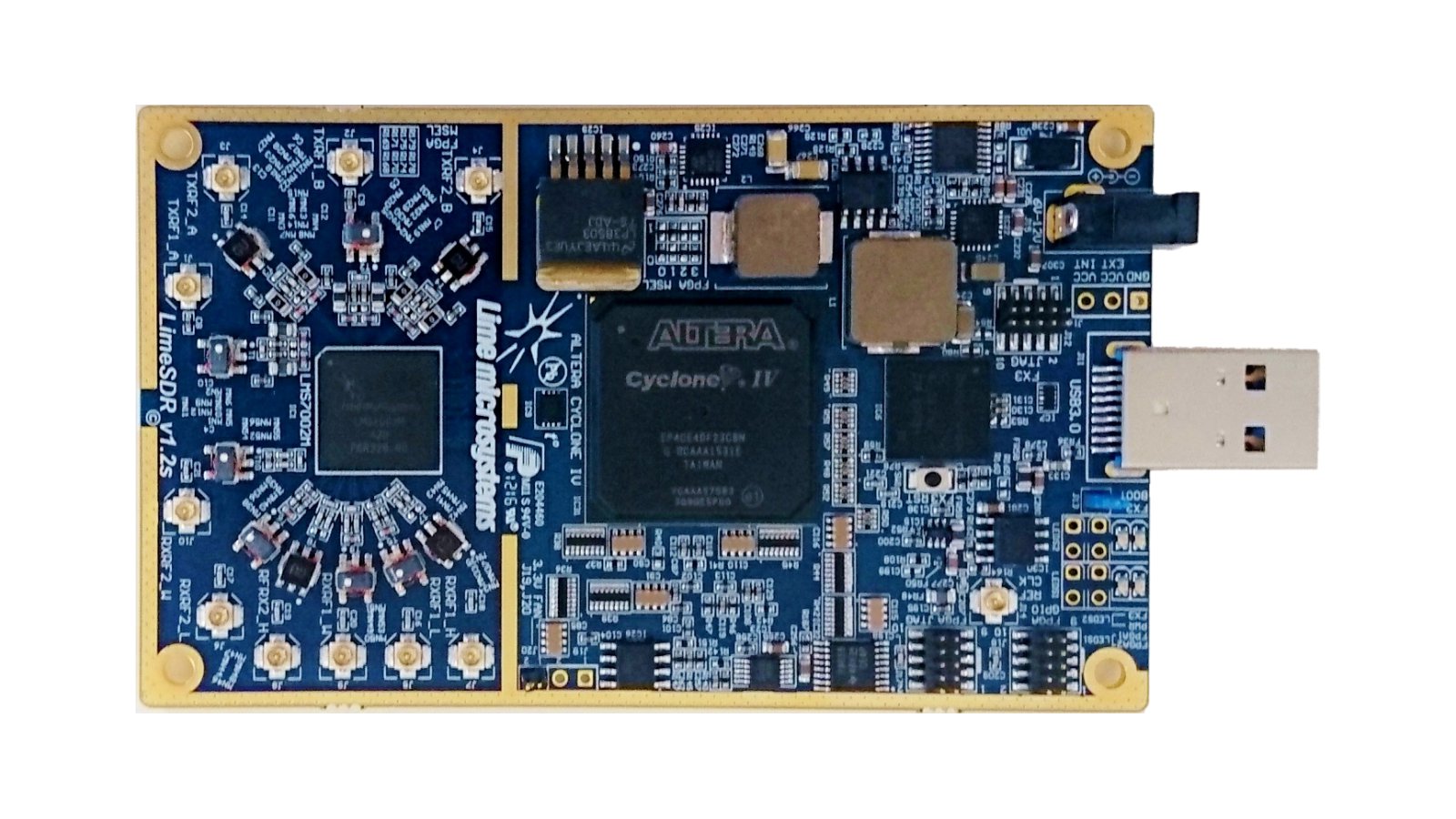
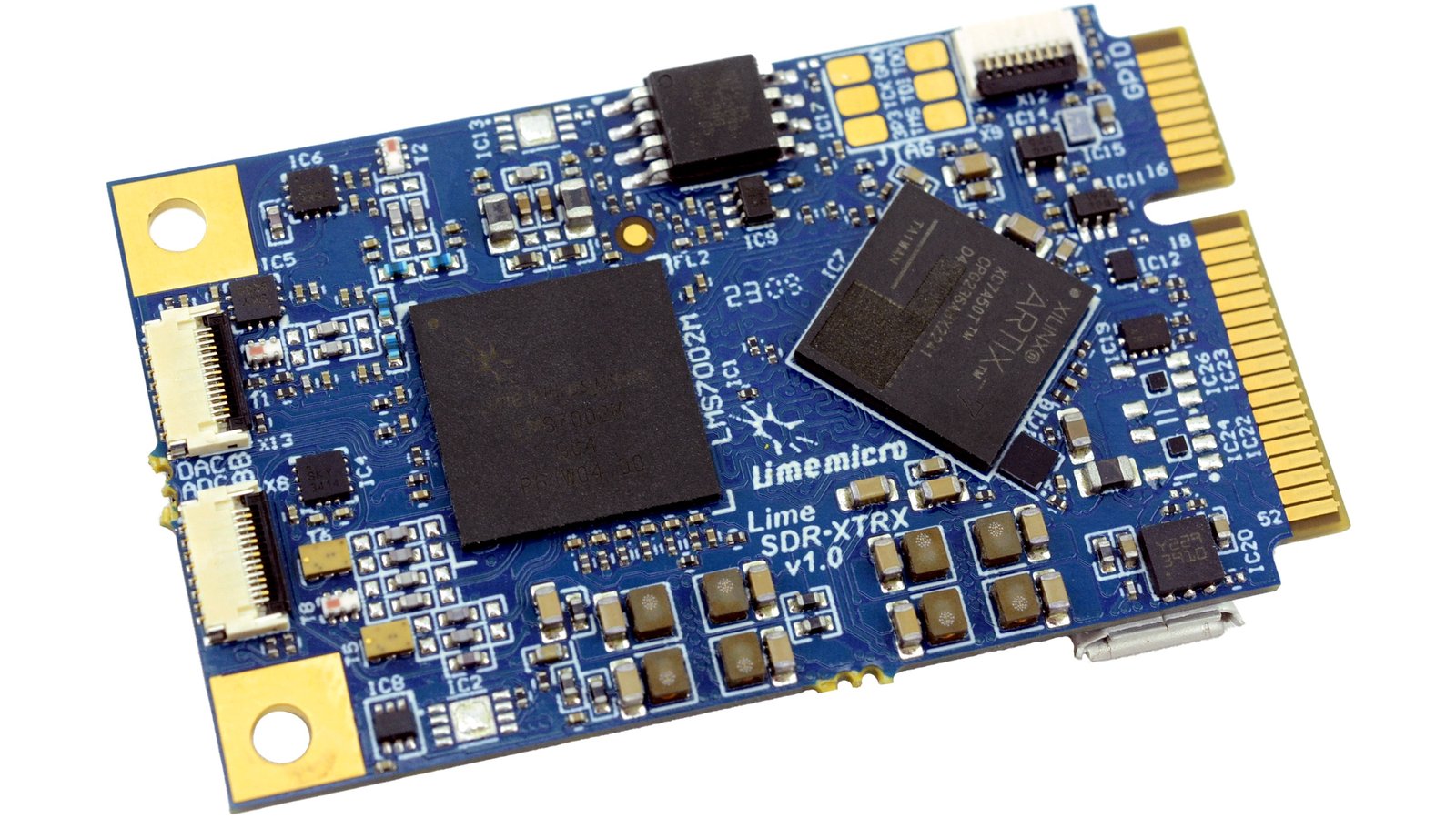
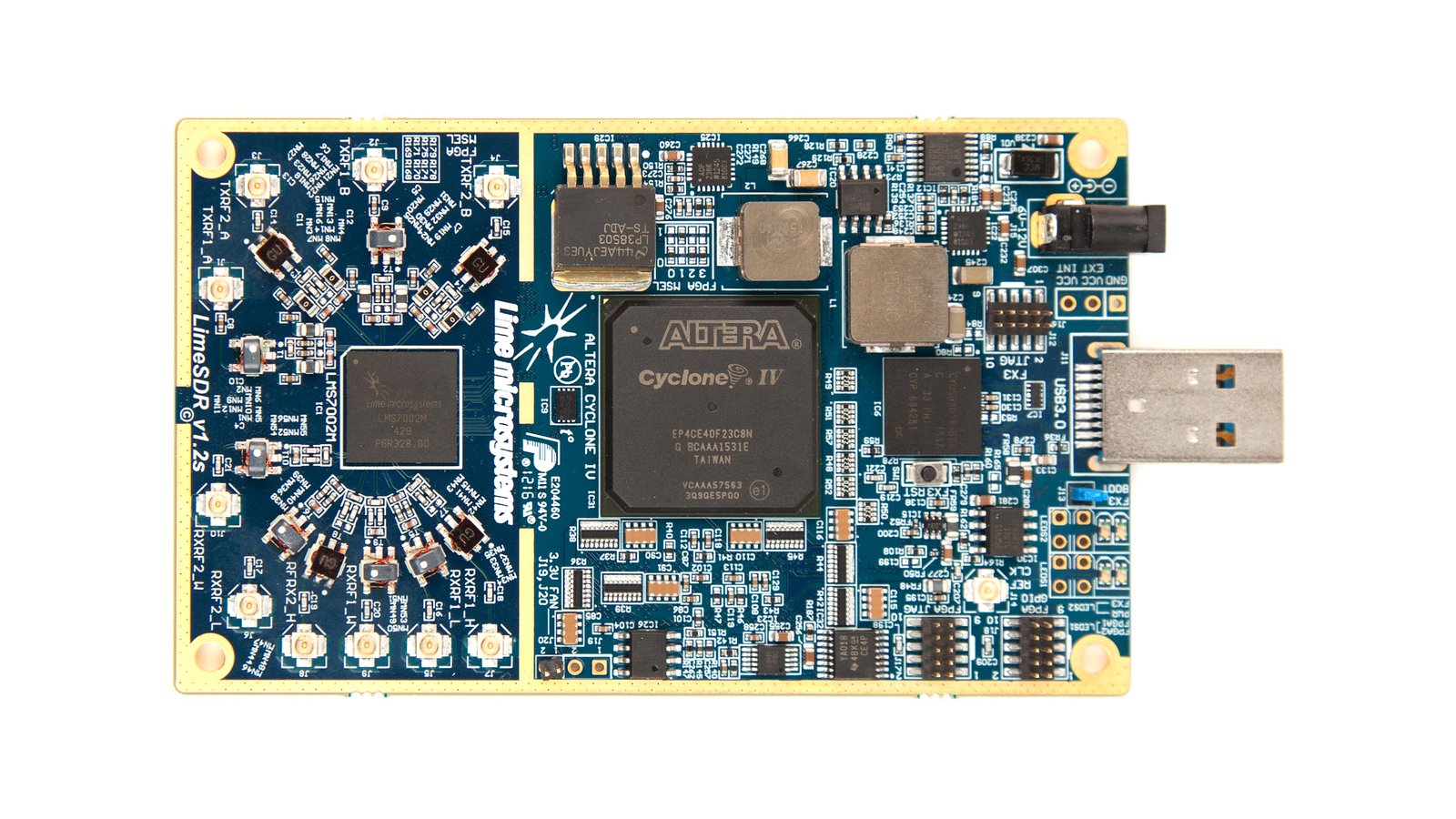
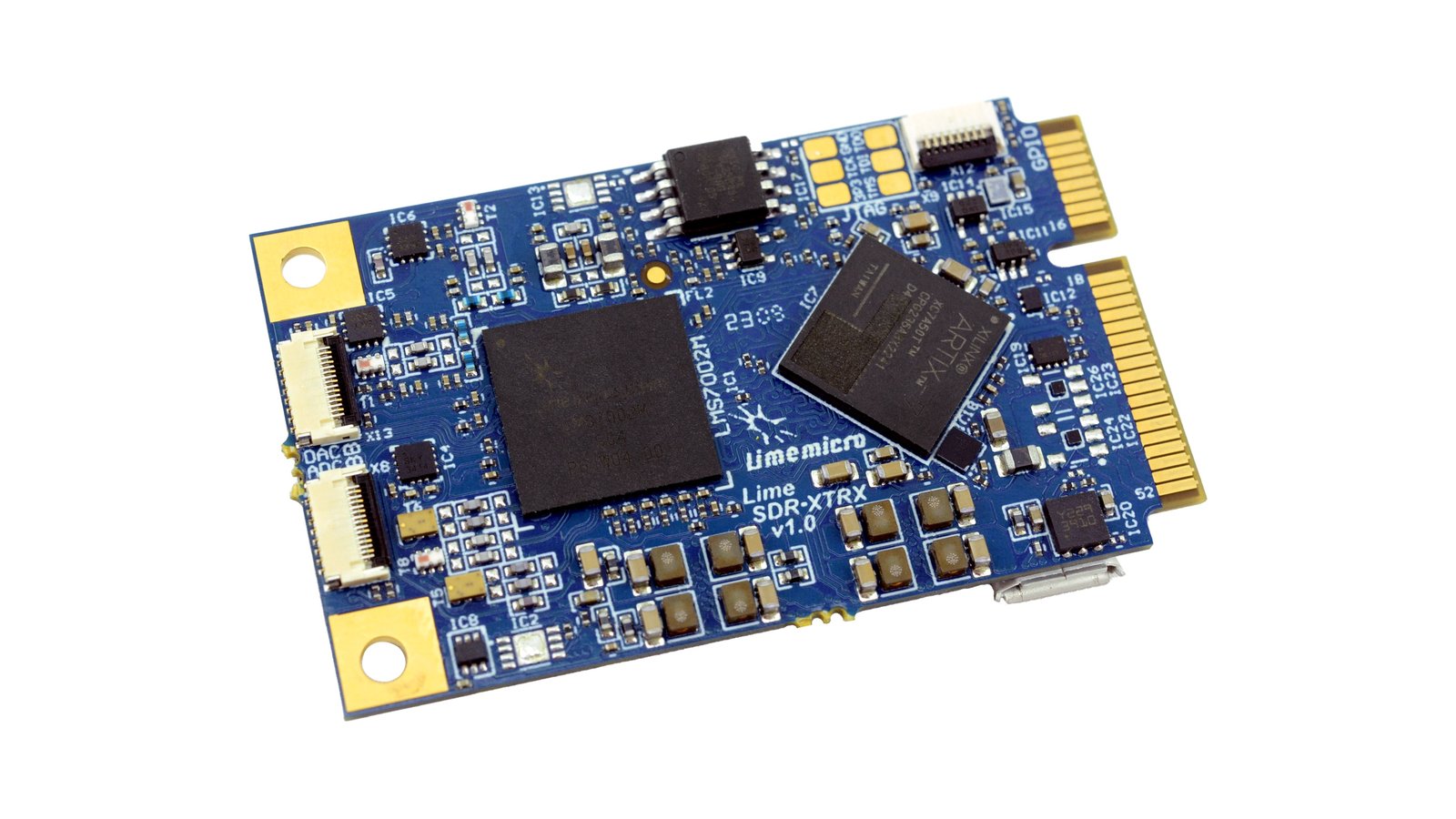
Lime’s LMS8001 Companion Board can shift RF signals between 800 MHz and 10 GHz. When combined with LimeSDR Mini 2.0, LimeSDR USB Type-A, or LimeSDR XTRX, the companion board enables continuous coverage from 10 MHz to 10 GHz, making it an extremely versatile and affordable SDR platform.
A similar add-on board was available for a limited time during the launch of the original LimeSDR Mini back in 2017. Now that we’ve improved the previous design, we’re proud to bring it to a wide audience at long last. It will allow owners of Lime SDR boards from Mini to USB or PCIe/QPCIe to greatly improve their frequency coverage.
Extend Your Reach
The main use for the Lime LMS8001 Companion is to use it as a repeater for either 6.5 GHz or 10 GHz, which includes many commonly-used services like LTE.
In this video, a LimeNET Mini is configured as an LTE base station with a downlink frequency of 865 MHz. This is connected to the first LMS8001 Companion, which shifts the signal up to 5.5 GHz before it is sent across the room to a second LMS8001 Companion, which in turn then shifts the downlink into LTE Band 5 at 886.5 MHz. The two boards are also configured to shift LTE uplink from handsets (at fDL - 45 MHz) in the opposite direction and back across the 5.5 GHz link towards the base station.
The second demo follows in the footsteps of the one earlier this week in which we can see a LimeNET Mini configured as an LTE base station, albeit this time with downlink on 2.5 GHz and the LMS8001 Companion configured to shift this all the way up to 10 GHz. A second LMS8001 Companion then performs down-conversion to 2.68 GHz in LTE Band 7, with both boards also configured to forward uplink in the opposite direction, but this time at fDL - 120 MHz. Once again we see a live video call being routed via the repeater link.
Features & Specifications
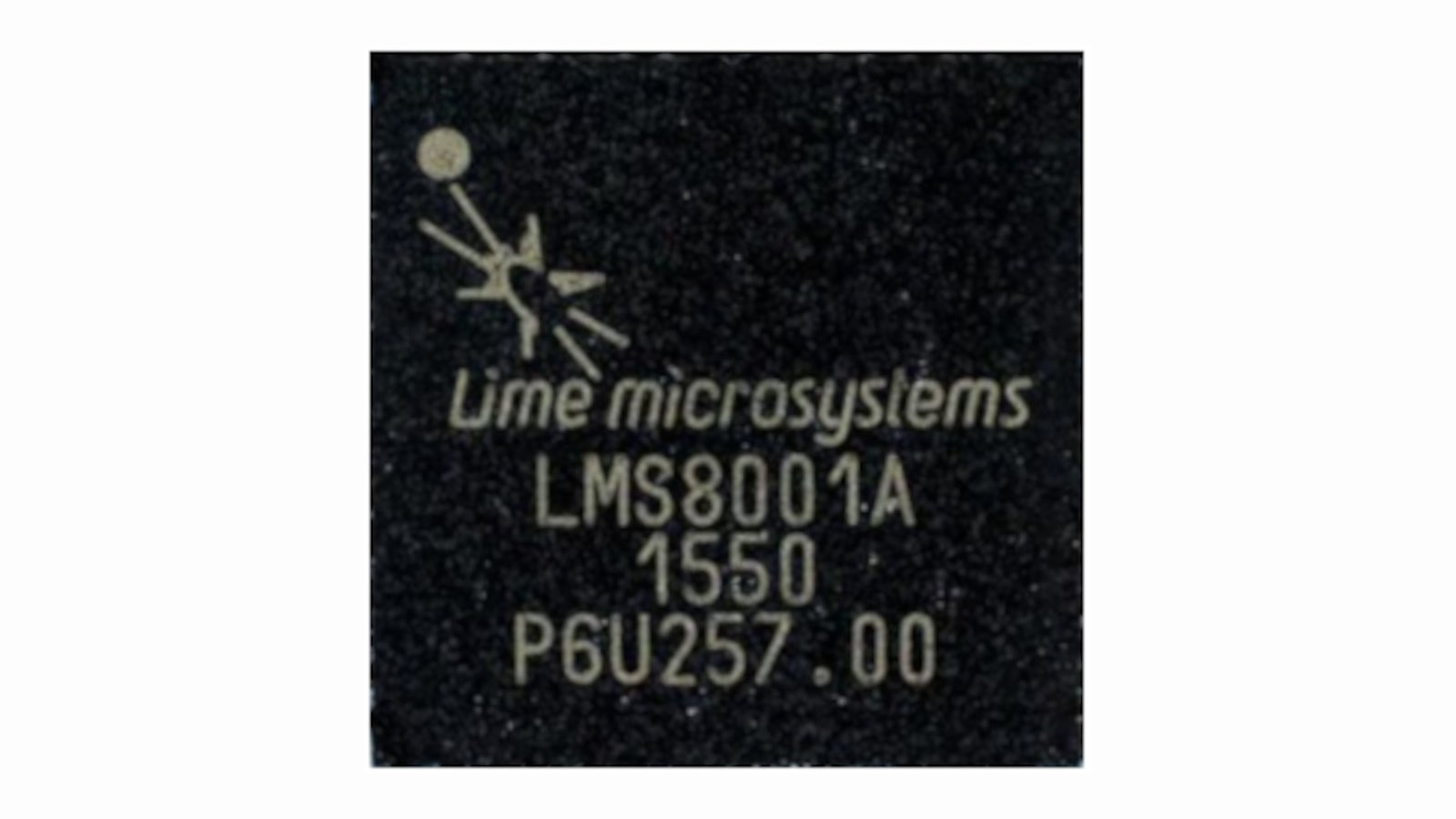
- Custom Lime RF frequency shifter chip (LMS8001A)
- STM32F105 controller
- USB Type-C for power and control
- 6-pin header for easy jumper access
- UFL and SMA connectors
- GPIO header
- 80.1 mm x 60.0 mm (3.15" x 2.36")
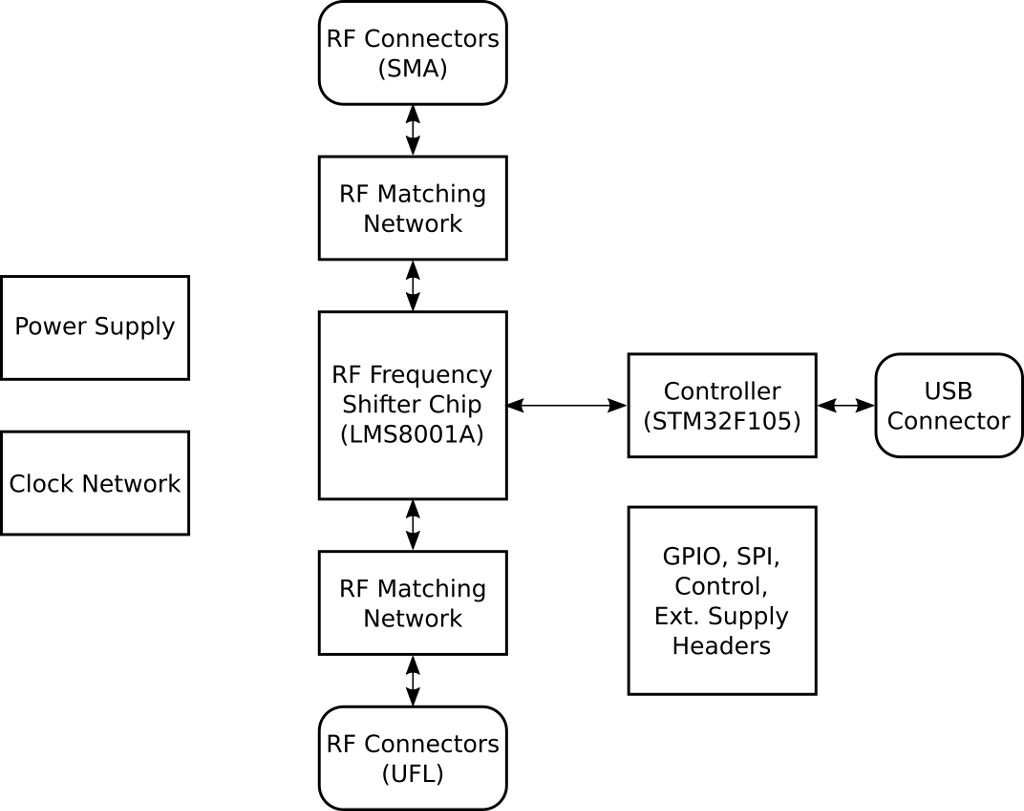
Block Diagram
From Engineering Samples to Production
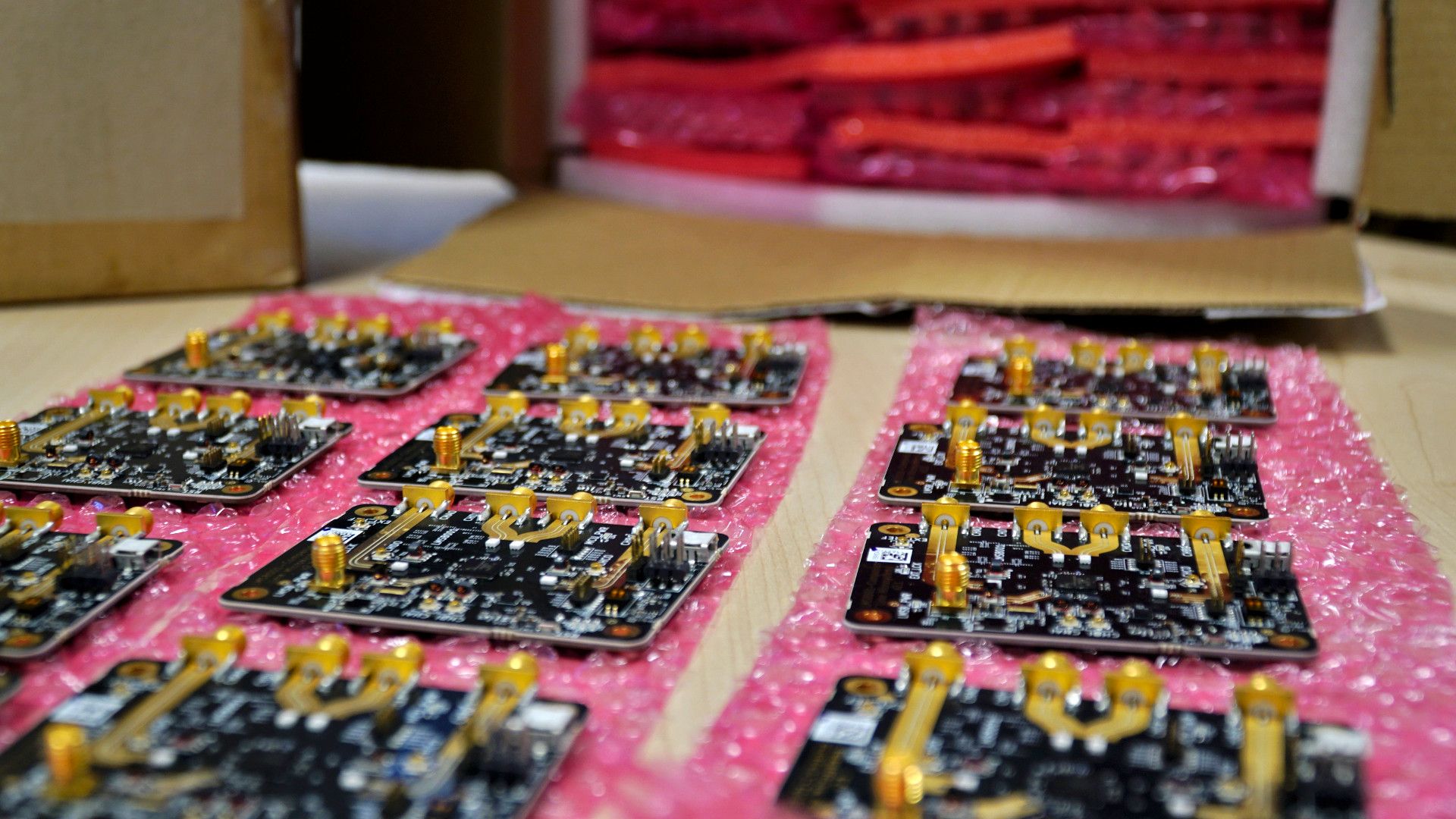
The first engineering samples of the LMS8001 Companion Board were introduced in very limited quantities in 2017, during the original LimeSDR Mini campaign. Now, with this new campaign, both the LMS8001 RF IC and the Companion Board are making the leap to production status and are expected to be continuously available. The IC itself has been optimized for yield without changing any of its functionality. In contrast, there have been some functional improvements and changes in the Companion Board, such as replacing the original USB micro Type-B receptacle with a USB Type-C receptacle and slightly retuned bands.
Open Source
The board design and firmware sources have been published to GitHub, along with the LMS8 Suite host software, an LMS8001 PLL Simulator, and documentation for earlier versions of the LMS8001 IC, which due to the packaging used are specified for use up to 10 GHz. We will update the datasheet for the newer LMS8001A soon.